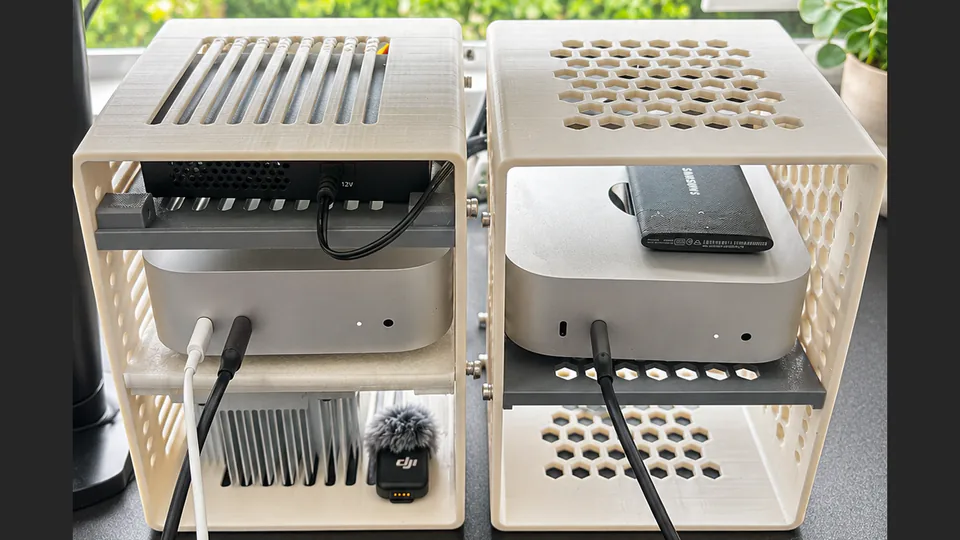
We asked Codex to design a stand for two Mac minis and their accessories under one monitor, with room for cables and airflow.
Codex used GPT-6.2 Astra to generate the 3D design automatically. We chose PETG filament for its toughness and heat resistance, then printed the multi-level stand you see in the photos.
From a desk problem to a printable design
OpenAI released GPT-6.2 Astra on 17 November 2026 and made it available in ChatGPT Work and Codex. For this build, we used the new model to turn the requirements of a real desk setup into a stand we could 3D print. OpenAI’s release announcement
The finished stand gives each Mac mini its own bay, with separate levels for accessories. The close-up shows slots and honeycomb openings across the top and sides, leaving space for air to move around the equipment. Apple’s Mac mini guide recommends allowing air to circulate beneath and around the computer. Apple’s Mac mini guide
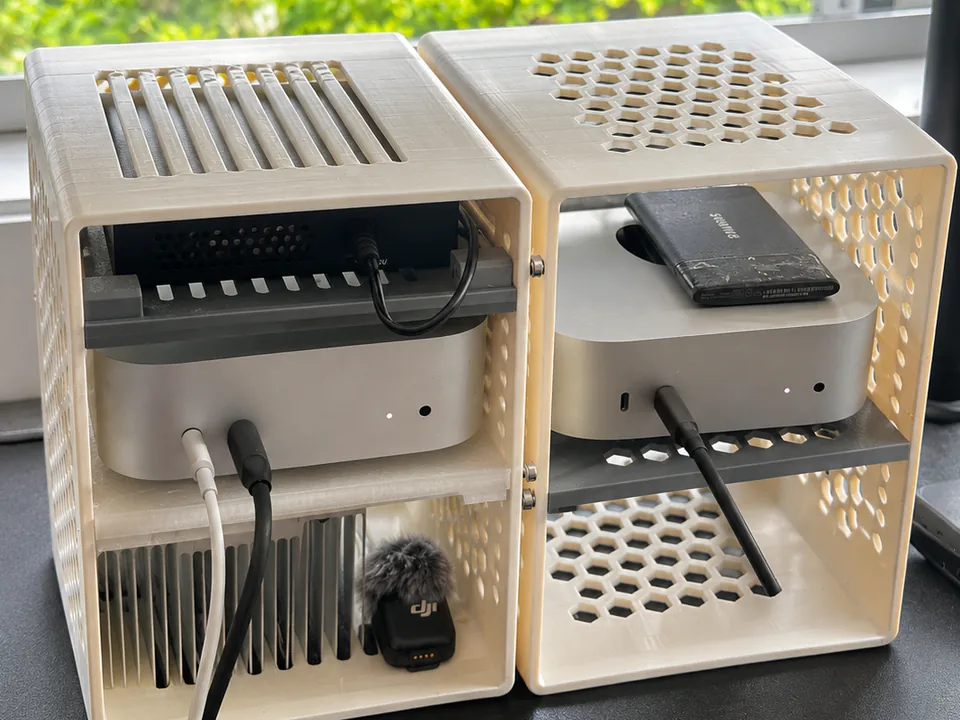
Why we printed it in PETG
A stand like this supports equipment every day and gets bumped when you plug in a cable or move an accessory. PETG combines toughness, good layer adhesion and temperature resistance, making it a practical choice for functional prints such as stands, brackets and holders. How much a finished part can support also depends on its geometry and print settings. Prusa’s PETG material guide
The same design workflow can start with a smaller need, such as a clip that keeps a charging cable within reach or a holder for a tool you use every day.
Making a stand, desk organiser or bracket of your own? 3DGO stocks PETG and High-Speed PETG filament in Auckland, with local pickup and nationwide New Zealand delivery. Browse PETG filament and check current stock